“Living together – love language”
1 Corinthians 13:1-13 (February 2, 2025)
Today we come to the second in a series of sermons from Paul’s first letter to the Corinthians. It’s all about living together – which ain’t easy. Did I mention that?
But you already know how difficult it can be: To live with certain neighbours. To put up with that one particularly difficult person – in your work life, in your home life. To stay married to a spouse who’s probably not perfect. To raise kids who stubbornly ignore the things you say.
Whether it’s that little world of our home, or the much larger world of nations jockeying for position, asserting themselves … living together ain’t easy.
 Last week we talked about diversity – in the natural world, in our human lives, and in the church as well. We are invited to celebrate that diversity.
Scripture also recognizes a deeper unity revealed to us in Jesus. We are baptized into one body with many members. All of us are valued by God. All of us contribute to a larger whole.
After saying these things, the apostle Paul lifts up the greatest gift of all. The one thing that truly matters. The treasure that makes all these other gifts look like peanuts. I wonder if you’ve been waiting breathlessly for it all week long? Well here it is: the gift of love!
I told you these sermons wouldn’t be talking about anything new. Just things we need to hear again. And then, again – throughout our Christian journey.
Over time they have a way of working themselves into our hearts and minds. And so the process of transformation unfolds. The Spirit is working in our lives, making us more like Jesus. Which is the goal.
✠
 The gift of love. So tell me, what do you think love is? Are there words enough in the English language to define it?
Is love a feeling, a fluttering in your heart? Is it a candlelight dinner and romance? Have you made plans for Valentine’s Day?
Is love a function of hormones? A biological necessity for reproduction?
What on earth is love? Especially the kind of love that Paul is writing about in 1 Corinthians 13, that lasts for all eternity?
✠
Before we go any further, let me say that context matters when reading scripture.
 The most common place to hear these words, in my experience, has been at a wedding. Picture a bride and groom standing there, starry-eyed at the front of the church, ready to make their vows.
The person officiating reads these words: “If I speak in the tongues of mortals and of angels, but do not have love …”
 It’s a beautiful passage! Very poetic. Enough to inspire a young couple. And maybe re-invigorate the love of every older couple sitting there, listening in. Yes, it’s a fine passage for a wedding.
But that is far from the original purpose of Paul’s letter. He’s writing to a fractious, divided congregation, where no one sees eye to eye, where competition trumps cooperation. And people are pulling in different directions, every person putting their own interests first.
 I picture the apostle Paul at his wit’s end, pulling his “pastoral hair” out! (Incidentally, he’s often depicted as a bald man in early Christian art.) Paul must surely have been frustrated.
 A noisy gong! A clanging cymbal! I can be the world’s most eloquent speaker. I can understand all mysteries. I can say to a mountain: “Be taken up and thrown into the sea.” (cf. Mark 11:23) But if I don’t have love, it doesn’t amount to a hill of beans!
As if to say, “Come on, you people. You can do better than this.” So, can we?
✠
I was speaking with a friend of mine about a week ago, who reminded me how much they dislike that song, “They’ll know we are Christians by our love.” Because we make a mess of loving others. And who do we think we are anyway? Are Christians the only ones who can love? The answer is, of course not.
Yet the invitation to love is central to the Christian calling. It’s at the heart of everything Jesus stood for. Remember how he said to his disciples: “I give you a new commandment, that you love one another. Just as I have loved you ….” (John 13:34-35)
Jesus himself embodied God’s love … as he cared for others, even the least among them. As he taught them, healed them, led them. Even died for them. That’s the kicker. “Having loved his own who were in the world, he loved them to the end.” (John 13:1)
He loved not only friends, but enemies also. And tells us to do the same: Care for others, even when they don’t give a hoot about you. When someone does you wrong, forgive. And not just once, but many times.
✠
So now we see that love is more than just a nice idea. And certainly more than mushy sentimentality. Love is a disciplined way of life, a path we’re called to follow.
 Love is a verb, a movement, a doing. Not mere words, but action.
Love, says Paul, means being patient. Showing kindness. Being humble – not boastful or arrogant or rude. It doesn’t draw attention to itself. It doesn’t gloat when things go wrong for others. It doesn’t utter falsehoods. Love rejoices in the truth.
You can see, can’t you, that this is no namby-pamby kind of love. This is love that challenges our humanity to the core. (And love that draws out of us the very best of who we are.)
Scripture calls for love in the most demanding circumstances. These times in which we live can be challenging. Like the church in Corinth, we too encounter division. Personalities drive us crazy. Love sounds fine, until it comes time to put it into practice with our neighbours.
✠
Love doesn’t happen all at once. It takes determination and practice.
If we want to keep our physical bodies fit and healthy, we have to exercise. It’s no good flopping down on the couch all day. We need to keep moving. This is why we have our Fitness in Motion group here at the church. To encourage seniors in our community stay well.
 And just as we exercise our physical bodies, so too we can build our spiritual selves in the “body of Christ.” It’s a form of resistance training, a way to grow our “love muscles.” We push against the weight of hatred, prejudice and pride.
Instead of lashing out, we try to be patient. Instead of further division, we work to find common ground. Instead of putting others down, we offer respect.
This is heavy lifting! It doesn’t come easy, not at all. And there are times when I have failed miserably. But the more we live God’s kingdom way, the stronger we grow. I’m hoping the day will come when it’s second nature to me.
✠
Speaking of days to come, our passage calls us to focus on things of lasting value.
Prophecies, tongues knowledge – all of these gifts the Corinthians thought so highly of, even bragged about – are limited and will, ultimately, come to an end.
 We are invited to turn our attention from that which is partial and fragmentary, to that which is complete. From present to future. From what is now to what will be.
From childish ways, to maturity in our Christian walk. From seeing in a mirror dimly, to seeing God face to face.
Christians have this eschatological (end time) hope. We live our lives in flawed, imperfect ways. But we strive for a kingdom that’s coming to be. We’re surrounded by chaos, disintegration. But we are living for the promise of a world made whole.
At the end of the day, says Paul, there are only three things of enduring value: faith, hope and love. And the greatest of these … well you know what that is. Love is the one thing that matters – eternally!
All else, everything we strive for and work so hard to attain – the good, the bad, the whole of our world and all our living – will fade into insignificance compared to this most precious gift in the God-given universe.
Faith hope and love abide. And the greatest of these is love.
When I arrive at the end of life, and I stand before my maker, the only thing that matters is that love will be waiting there to welcome me. I trust my life with that! Can you?
 ✠
✠
It is a gift, you know: Salvation at the end of time. Love even here and now. These are gifts that come from God’s generous hand.
Scripture claims the only reason we love at all is because God has first loved us. (1 John 4:19)
“…love is from God; everyone who loves is born of God and knows God. Whoever does not love does not know God, for God is love.
 “God’s love was revealed among us in this way: God sent his only Son into the world so that we might live through him.” (1 John 4:7-9)
I think of the amazing turn-around the apostle Paul experienced in his life. He was a smart guy, well-educated. He was zealous for the Lord. So much so, that concern for righteousness turned to violence. There was no love in his practice of faith.
Until one day Jesus showed up, out of the blue, and revealed himself, and said, “Saul, why are you persecuting me?” And it knocked proud Saul to his knees.
Love is always seeking us. Never gives up on us. Wants to dwell within us.
✠
When I read 1 Corinthians 13, I hear these lovely, lofty words. Then realize all the ways I have fallen short of them. It’s fine to say we should love more. Be patient, less irritable. Kinder, thinking less of self …. All down through the list of things that Paul presents in our passage as the way of love.
In my experience, it’s a bit like flogging a stubborn mule that’s bent on resistance. It doesn’t want to go. My life doesn’t want to change.
 But as we open ourselves to God’s love, allowing it to come and dwell more fully within us – like a burning ember glowing in our hearts – then, maybe, hopefully, love will flourish!
And lives will change. And my life will grow to be more like that of Jesus.
The source of love is God. Love, says Paul, is the greatest of all God’s gifts. In love we were formed. In love we are redeemed. In love we will be welcomed. Love never ends!
And for that, we say whole-heartedly: “Thanks be to God!”
“Water and Spirit”
Luke 3:15-17, 21-22; Acts 8:14-17 (January 12, 2025)
 I guess you may have heard that this year marks an historic milestone for Anabaptists. It’s been 500 years since the beginning of this movement that we Mennonites are a part of.
Last Sunday our guest speaker, Ken Bechtel, reminded us of the characters and stories that shaped our past. Those early days were tumultuous times – for the church, and for society as a whole. Back then, being true to your conscience might actually cost you your life.
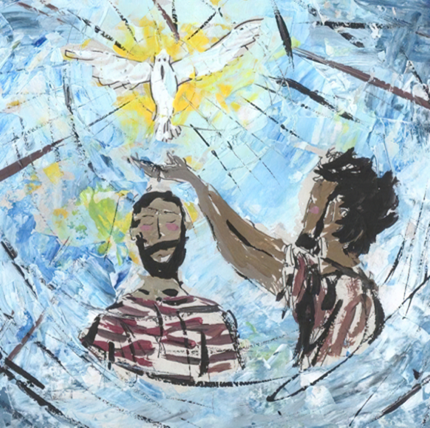
But our scripture for today takes us back even further. Today we celebrate the baptism of Jesus. And it’s this baptism which all churches hold dear.
https://diglib.library.vanderbilt.edu/act-imagelink.pl?RC=59319 [retrieved December 31, 2024]. Original source: Liz Valente, https://www.instagram.com/donalizvalente/." width="202" height="131" />
Baptism marks the beginning of Jesus’ ministry. Jesus has left his early years behind. Now he’s ready to launch into something new: his God-given mission to proclaim the Reign of God, inviting people into a new community shaped by repentance and the renewal of God’s Spirit.
“I baptize you with water,” says John the Baptist. “But he will baptize you with the Holy Spirit and fire.” What I want to talk about today is the importance of the Spirit in our life of faith.
✠
 Imagine Jesus, standing there in the Jordan River, dripping wet. Notice that he’s praying. And as he prays heaven above is opened. The Holy Spirit descends upon Jesus like a dove. And a voice from heaven affirms his identity as God’s beloved Son.
There’s no explicit description of the Holy Trinity in scripture. But this is one of those biblical passages that points toward it.
Here we have the heavenly Father, whose voice resounds from on high. And the Holy Spirit who arrives to be present with Jesus here on earth. And the beloved Son who prays to the Father and receives the Spirit.
So … Father, Son and Holy Spirit communing together in the fellowship of prayer. It’s a snapshot of God’s very being.
 The Spirit is an expression of God that resists easy definition. So when I say I want to speak about the Spirit’s importance in our life of faith, I know I’m taking on a bit of a challenge.
Here the Spirit appears like a dove, in bodily form. Which at least gives us something to visualize.
But Spirit is not always visible. The very word Spirit, in both biblical languages (Hebrew and Greek) means wind or breath.
Jesus said, “The wind blows where it chooses, and you hear the sound of it, but you do not know where it comes from or where it goes. So it is with everyone who is born of the Spirit.” (John 3:8)
In other words, there is mystery to this. The Holy Ghost is intangible, ephemeral.
As we think of baptism and our own incorporation into the community of Jesus’ followers, what role does the Spirit play? Has the Spirit of God descended upon you, as it did upon Jesus?
✠
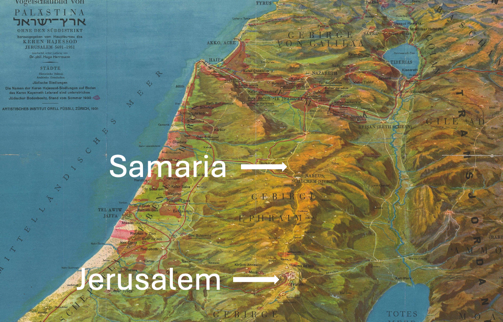 In our second passage from the book of Acts, we see the gospel spreading beyond Jerusalem to the region of Samaria. Philip had proclaimed the Good News and they believed it! They were baptized in the name of Jesus.
Just one thing remained. The Spirit, we are told, had not yet come upon them. So the apostles prayed. And then they laid their hands upon them. And the Spirit came!
Apparently baptism, apart from the Spirit of God, is not enough! If God isn’t in us and among us, renewing us from the inside out, well what use is immersing, or dipping, or pouring or sprinkling – or any of it?
Baptism isn’t all up to us. It also involves the work of God. It is a divine act of grace.
So I want you to think about your baptism, if you can remember. Was it something more than empty ritual, a formality, a church tradition? Something that happened once but now has been set aside? What’s going on with baptism anyway?
Jesus said, “No one can enter the kingdom of God without being born of water and Spirit.” (John 3:5) There it is again – Spirit matters!
So is the Spirit of God working in you? And if so, how would you know?
✠
I want to mention four things today about the mysterious work of God’s Spirit. And the first is this: The Spirit is something in us that prompts a movement toward God.
Without the Spirit moving in our lives, none of us would have any inkling about faith. The Spirit works in us before we know a thing. The Spirit draws us to Jesus.
 When I go for a hike I sometimes look down at my legs and find these bothersome burrs attached. I didn’t even realize they were there!
But somehow, as I walked through the grass and vegetation, they found me. And when they did, they grabbed hold. They’re persistent! You’ve got to really work to get rid of them.
And it strikes me that’s a lot like the presence of the Spirit. Can we ever get rid of God?
Before I knew anything about Jesus, the Spirit of God was preparing my heart, creating a space, nurturing curiosity and desire.
The Spirit is that niggling something within all of us that won’t ever let go. It sticks to us, reminding us who we are. And so it leads us closer, ever closer, to Jesus.
The Spirit is God working in our lives – to bring us into that loving community with God, and others who are also part of this fellowship of faith.
✠
The Spirit prompts. And the Spirit is also something within us that empowers. The Spirit strengthened and equipped Jesus, guiding him in all that would follow.
We know there would be many challenges for Jesus. Immediately after his baptism, he was led by the Spirit in the wilderness where he faced temptation.
Being faithful to God does not always make life easier. That’s not part of the deal. Hard times come to everyone. The only way through is to rely on a power greater than ourselves.
The Spirit empowered Jesus for ministry. Later, his disciples found they were gifted with the Spirit too!
 The story is told of a man who walked into a hardware store after a windstorm had taken down a number of trees on his property. The salesperson said, “I have just the saw for you, guaranteed to cut up 10 trees a day.”
But the next day the man came back to complain. “I only managed to cut up three trees. You said it could handle ten!”
The salesperson was confused. He assured the man it was their finest saw. He took it, set the choke, pulled the cord and revved the throttle.
“Hold on,” said the man. “What’s all that noise?”
We can do some things by ourselves, but unless the Holy Spirit is part of our lives we won’t be living up to our full potential.
✠
The Spirit prompts. The Spirit empowers. And the Spirit is also something in us that reveals.
The Spirit enables us to see new things. To understand our lives and the world around us in a new way.
Our scripture reading today is remarkable. Because none of the believers in Jerusalem ever expected a Samaritan to receive the word of God. Yet that’s what happened!
You know the history between Jews and Samaritans. Tensions and hostilities went back hundreds of years. The Jews of Jerusalem considered the people of Samaria to be racially impure and theologically heretical.
 When word arrives that Philip’s mission to the Samaritans had borne fruit, they could hardly believe it: “I mean, why would he go there in the first place?” They send Peter and John to investigate.
The Spirit is always leading us in new ways. It was a stretch for the early church to embrace an ever-widening circle of God’s people.
And here we are, early in a new year, on the cusp of a new beginning. I wonder, where will the Spirit lead us next on our journey?
✠
 The Spirit prompts, empowers, reveals. And finally, the Spirit is something in us that transforms our living. It changes us!
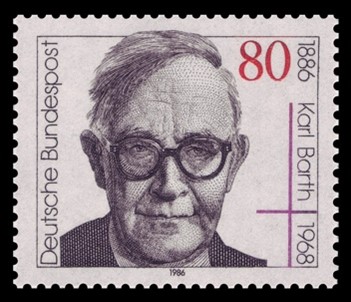
One of the great theologians of the previous century, Karl Barth, used to speak of the church as reformed and always re-forming. Semper reformanda.
One reforming of our lives is never enough.
You accepted Christ as your Saviour, and that was good, and you began to grow. But are you growing now? Is there anything that’s changing in your faith or in your life?
It’s one thing for the church to have gone through a reformation 500 years ago. But are we open to reformation now? Do we expect further changes – in our understanding, in our practice. In our discipleship?
God isn’t finished with us, you know! The Spirit is still moving in our midst.
 And the only way for the church to change is as each one of us opens our lives more fully to the Spirit’s life Because, after all, the church is us.
And only as we welcome that transforming, re-shaping and renewing wind of God that brings about a new creation … Only as we allow the flame of the Spirit to burn away the chaff and purify what is good and holy … Only then will our collective community of faith be renewed.
In what ways are you being invited to grow and change and become more fully the person God desires you to be? Can you name one way? Take a moment and think about that. Maybe write it down on your bulletin.
 ✠
✠
The Spirit prompts, empowers, reveals, transforms. But how do any of us receive this Spirit?
I want you to notice that both our scripture readings today emphasize the importance of prayer.
After his baptism, the Spirit of God descends upon Jesus as he prays. In the book of Acts, the Spirit comes upon the Samaritans as the apostles Peter and John pray for them and lay their hands upon them.
Jesus said, “If you who are evil, know how to give good gifts to your children, how much more will the heavenly Father give the Holy Spirit to those who ask him.” (Luke 11:13)
To receive the Spirit, maybe all we need to do is ask. Take Jesus at his word. Pray. And trust that it will happen.
Today, as we remember Jesus’ baptism, and our own, let’s pray for the Spirit to continue to be present in our lives! Amen.
✠
“Who sees it?”
Luke 2:21-38 (December 29, 2024)
Merry Christmas everyone! I say that, because it’s still Christmas. Maybe not Christmas day …  But do you remember that old English carol, “On the first day of Christmas, my true love gave to me …” It goes on forever! The song recognizes 12 days in the Christmas season.
It was lovely to have our service at Bethany Manor on Christmas Day. But what about today? Is this morning a kind of anti-climax? Is Christmas finished?
Perhaps some of you were wondering if you should come to church at all. Or just stay home, rest up and recover from all the hoopla. I can hardly blame you for that. All these celebrations can be exhausting.
But I’m here to tell you that the work of God isn’t finished in a day. Or in seven days. Or a hundred-thousand days! God is moving in our world! The saving, redeeming, healing, peace-making, community-building, work of God goes on. And guess what? We can be part of it!
 ✠
✠
The Catholic priest and writer, Andrew Greely, has something important to say about our celebration of Christmas:
“Perhaps the hardest thing to remember about Christmas is this,” he writes. “It celebrates the incarnation, not just the nativity. The incarnation is an on-going process of salvation, while the nativity is the once-for-all-historical event of Bethlehem. God continues to take flesh in our midst, in the men and women and children who form his body today. And the birth we celebrate is not just the past historical event but Christ’s continuing birth in his members.”[1]
Did you hear that? It’s not only about a birth long ago. It’s about the ongoing incarnation of Christ, God taking on our flesh and blood. And continuing to dwell in our midst by the power of the Holy Spirit. “Christ in you,” writes the apostle Paul, “the hope of glory!” (Colossians 1:27)
So where do you see that presence in the world? In whom does Christ continue to be embodied? Where is God’s saving power at work?
 ✠
✠
https://diglib.library.vanderbilt.edu/act-imagelink.pl?RC=57074 [retrieved December 28, 2024]. Original source: Lauren Wright Pittman, http://www.lewpstudio.com/. " width="159" height="178" />
I should pause here, to give you an update on our status as grandparents. There’s still no baby in our family. Our daughter, Katie, has yet to give birth. She’s now one day past her due date. We’re all still waiting.
But of course life goes on, even as we wait. The children who’ve already arrived need to be cared for. Giving birth is a big thing. But it’s not the only thing! It’s just the beginning. After birth comes the real work of parenting.
How do we care for this gift of new life? How do we treasure it, nurture it, encourage it to grow and thrive? In this Christmas season, how do we treasure the life of God’s reign that comes to our world in Jesus? How do we tend to its flourishing within us and among us?
✠
In our scripture reading, Mary and Joseph bring their infant child to the temple, honouring the traditions of their Jewish faith. They were typical of any young family, I suppose. But when they arrive at the temple, two people see something very different.
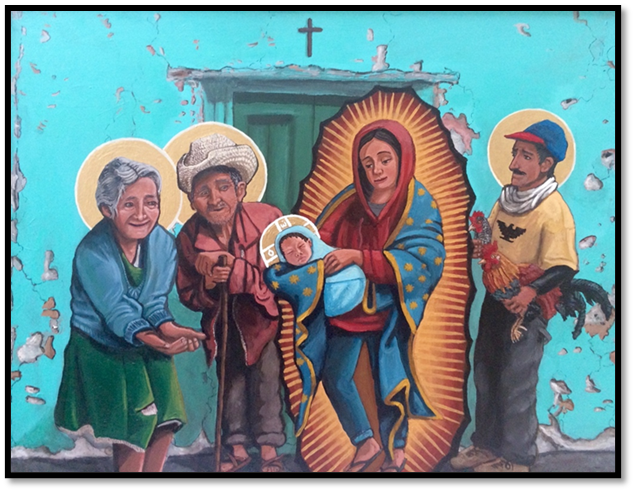 I’m talking about Simeon and Anna. Before I tell you about them, have a look at this picture from the front cover of the bulletin. The artist, Kelly Latimore, asks, “Who are the saints that are among us here and now? Where is Christ present right in our own backyards?”[2]
This image is her take on a modern-day presentation story. It’s humble, folksy. Mary and Jospeh are pictured as peasant farmers, from Central America. The pair of turtle doves to be offered in sacrifice become roosters tucked under Joseph’s arms. The temple is re-imagined as the humble village church. Anna and Simeon are elderly neighbours, greeting them at the door.
It all seems so very ordinary. And yet it absolutely isn’t! There is, after all, holiness and divine presence at the birth of every child.
✠
In our story, Simeon and Anna have eyes to see how special Jesus is.
Simeon was a righteous man, a person of prayer. “The Holy Spirit rested on him.” The Spirit had given him assurance that before his life ended, he would see the Messiah, God’s anointed ruler. “Guided by the Spirit, Simeon came into the temple.” And guess what? It just happened to coincide with the arrival of Mary and Joseph and baby Jesus!
When he saw them, the old man, who’d been waiting for this very moment, took Jesus into his arms. His face lit up! His heart was filled with praise! “Now, Lord, I can go in peace. For my eyes have seen your salvation! Here it is, shining like a light for everyone to see.” And he means everyone – Jews and gentiles, the whole of God’s blessed humanity.
✠
Then there is Anna. Scripture calls her a prophet, which means one who speaks the God-given truth. We need people like that, don’t we?
She spends hours in the temple, fasting and praying. Scripture says “she never left the temple but worshipped there night and day.” Both Simeon and Anna are “seekers” who want to know God’s way.
Anna sees this child. And praises God! She announces Jesus’ true identity to any who will listen. “Go tell it on the mountain, over the hills and everywhere …”
Did folks in the temple think she was crazy? Who is this wizened woman, babbling nonsense about an ordinary baby? Best give her a wide berth.
✠
Simeon and Anna, two wise and faithful elders who clearly see the presence of God at work in the world. Even when others may not.
The temple was the centre of religious life. But not everyone there had visions of the Almighty. Life went on from day to day. And this day was very much like any other. Expectation was low. The surrounding circumstances were dismal. Life was hard for all but a few in Roman occupied Palestine.
Can we see the presence of God in our lives, even when all around is dark and dismal?
✠
There’s a poem by Mary Oliver, titled “Sometimes.” It’s a reflection on a variety of things she observes: death, God, sunflowers, thunderstorms, love … The poem does not flow easily. Nor does it make complete sense to me. I will have to sit with it a little longer, I think.
Yet at the very centre of her poem, written in italics, plain and clear as day, there is this:
“Instructions for living a life:
Pay attention.
Be astonished.
Tell about it.”[3]
Isn’t that what a poet does? Poets pay attention. They notice things in the world around them. Important things, astonishing things. Then they lift them up in words and images and offer them to the rest of us, hoping that we will catch a glimpse of something too.
✠
 Ignatius Loyola was a Spanish Basque soldier, who was seriously wounded in battle. During his convalescence, he experienced a religious conversion.
As founder of the Jesuit order, he was especially concerned with the formation of faith in the members of his community. So he developed a set of what he called “Spiritual Exercises”.
There is one form of prayer that he thought was particularly important. Even if you can do nothing else, he said, at least do this: At the end of the day, be still. Take time to recall what has taken place. And name those places where Christ has been present. Write them down in a diary.
The whole point is to help us become more in tune with God’s presence in our lives. And to be grateful for that! Because otherwise, we would miss it. And we would go through life unaware of the presence of Christ dwelling so near in ourselves and in others.
Don’t just let your life pass by! Each and every day, ask that your eyes may be opened. Notice the blessings of God.
✠
Pay attention. Be astounded, says Mary Oliver. Because life really is a most amazing thing! An awesome gift.
Sometimes I think there’s not a lot of awe left in the world. In our desacralized time, drained of holiness, filled instead with all kinds of superficial things – not God. Things that take us farther away from God …
 Notice. Be astounded!
Then talk about it. Don’t just keep it to yourself. Tell others what you see. Because only as we speak and share and point and write and offer our vision to the world can others see it too.
How else will our children, or our grandchildren, ever know about these things we treasure?
✠
Reflecting on this passage, Karoline Lewis, a professor at Luther Seminary in Minneapolis, notes how Simeon and Anna both shared what they saw in Jesus. They didn’t hold it in. They opened their mouths and out it came, as simply and naturally as can be. It wasn’t forced. They bore witness. They couldn’t help it!
Some of us, says Lewis, find it easy to share news about the latest restaurant we may have visited. But when it comes to the really important things in life, deep matters of soul and spirit, we hesitate. Why is that, I wonder?
Pay attention. Be astounded. Talk about it. Be poets. And prophets. Be Annas and Simeons. “This little light of mine, I’m gonna let it shine!”
 ✠
✠
I guess that’s what our story today invites us to do. When the light of the world comes to us … whenever we catch even a glimpse of it out the corner of our eye, let’s stop and take it in. Let’s embrace this new life that’s come into our world. Hold it tenderly. Treasure it.
And don’t keep it to yourself! Hold it out for others. Bear witness to the reign of God in word and deed.
Let God’s life continue to flourish and grow – in you, in all creation. May gratitude be in your heart and praise be on your lips, today and always. Amen.
[1] Fr. Andrew Greely, quoted in email list from Imago Dei Christian Communities, December 26, 2024.
[2] Kelly Latimore, https://kellylatimoreicons.com/pages/about, Accessed December 27, 2024.
[3] This poem appeared in Red Bird by Mary Oliver, published by Beacon Press, 2008. Shared here: https://readalittlepoetry.com/2014/09/10/sometimes-by-mary-oliver/, Accessed Dec. 26, 2024.
